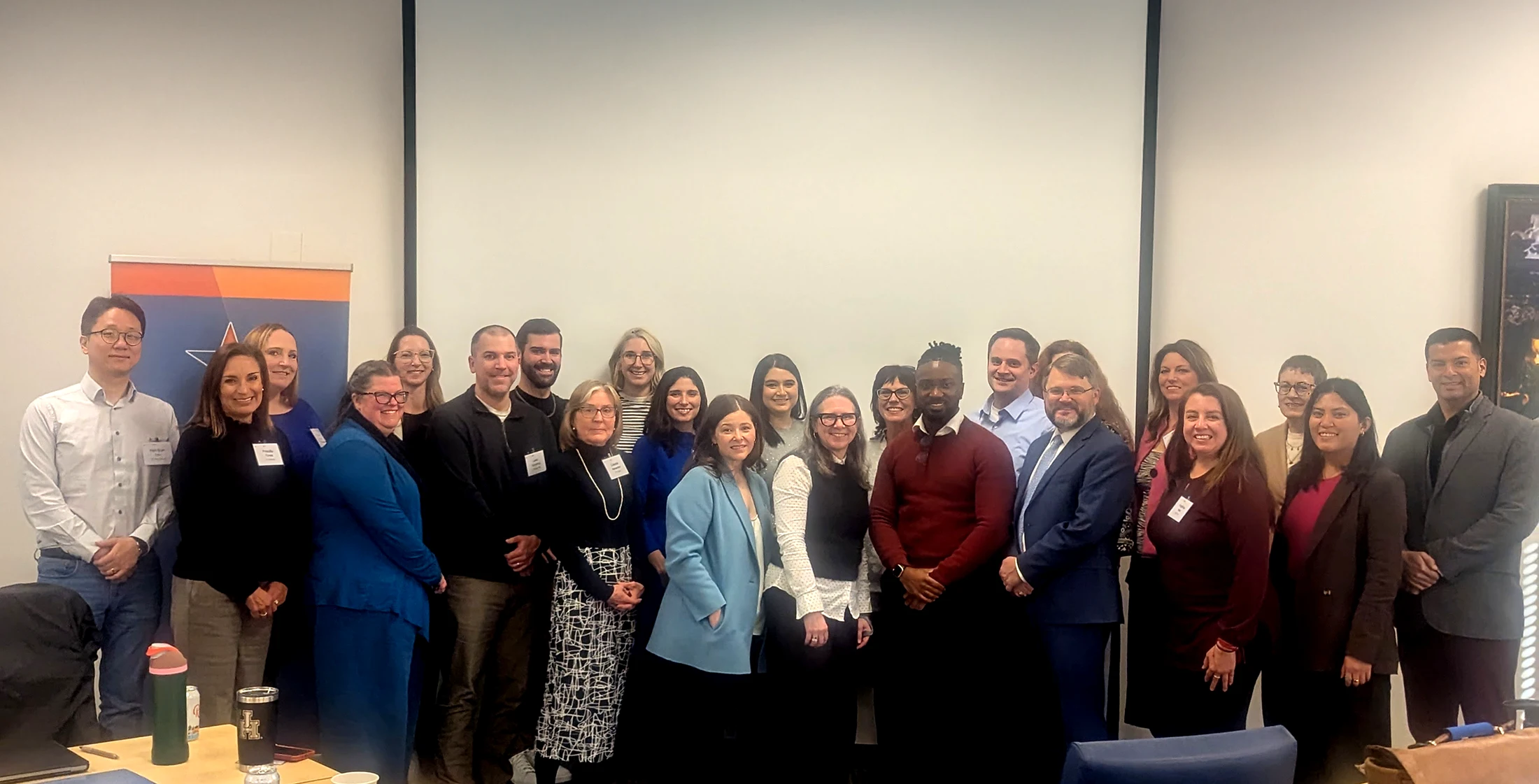
The LONESTARP3 Data Council launched in January of this year with a highly successful kick-off event. Since then, the Data Council met nearly monthly to discuss problems of practice and shape research and data practices across the state. During initial meetings, we identified priorities for the Council’s work and directed those priorities into open-access products for our network. These initial products emerged under the leadership of two Council members – Dr. Jennifer Freeman, Assistant Professor at Texas Tech University and Dr. Lane Sobehrad, Coordinator of Research and Innovation at Lubbock ISD. Council members gave periodic feedback on the products to support open, replicable approaches to data that can reduce reporting burdens and strengthen equity and accuracy in college, career, and military readiness (CCMR) accountability.
CCMR Credential-to-Career Crosswalk
Authored by Dr. Jennifer Freeman and Dr. Jacob Kirksey
This crosswalk combines publicly available data from multiple state and federal agencies. U.S. Department of Labor regional labor demand codes (Standard Occupational Classification [SOC] codes) and U.S. Department of Education postsecondary program areas (Classification of Instructional Programs [CIP]) codes are linked to Texas Education Agency and the Texas Workforce Commission codes, including Career and Technical Education (CTE) Programs of Study, Industry-Based Certifications (IBCs). The resulting crosswalk provides a comprehensive view of how labor market needs align with education and credential pathways across Texas.
Why it matters:
While there are existing crosswalks, none include the full spectrum of CCMR indicators that show how student coursework and credentials connect to real regional workforce opportunities. This tool can also show how policy–data alignment can clarify which credentials truly prepare students for high-demand jobs and potentially identify gaps in data and misalignment between programs of studies and IBCs. Policy Relevance Shows how open, replicable tools can improve accuracy, reduce reporting burden, and increase equity in CCMR accountability.
How to use it:
Anyone interested in seeing the intersections between labor market demand and credential production. This is particularly useful for researchers who can use this as an interactive tool, or as a model for coding schema for linking data in their own analysis programs.
Use Case 1:
The Value of Alignment
Empirical study linking aligned IBCs to higher wages and credential attainment, demonstrating measurable returns to policy-aligned pathways.
Use Case 2:
Mapping Alignment Across Texas
Descriptive analysis showing where CTE programs and IBCs align with local labor demand; includes statewide heat maps and trends from 2019–2025.
Study Coming Soon
LONESTARP3 CCMR Open Source Tracking and Monitoring
Authored by Dr. Lane Sobehrad
The purpose of the Open Source Tracking and Monitoring Project is to develop a system that enables districts to accurately reflect student achievements and successes in accountability measures. Although Texas public schools are required to track CCMR indicators as part of state accountability, districts currently face significant challenges in consistently collecting, monitoring, and analyzing this data across campuses. Data is housed in multiple, disconnected systems (e.g., assessment vendors, career certification providers, military recruitment reports, and internal student information systems), leading to delays, inaccuracies, and gaps in reporting. As a result, campus and district leaders lack real-time, actionable insights into which students are on track to meet CCMR benchmarks, which interventions are most effective, and where equity gaps persist among student subgroups.
Why it matters:
There is a need for a systematic, cross-district process – that is also transparent and sustainable – for tracking, monitoring, and reporting CCMR progress, ensuring data accuracy, early identification, timely interventions, and equitable monitoring. In terms of policy, this tool shows how open, replicable tools can improve accuracy, reduce reporting burden, and increase equity in CCMR accountability.
How to use it:
Using this open source resource, district leaders, community partners, researchers, and policy makers will have the ability to provide timely support, address the risks of underreporting student successes, and ultimately impact state accountability ratings and student postsecondary outcomes.
This can enable small and rural districts to replicate TEA’s accountability calculations, identify readiness gaps, and generate actionable dashboards. Future uses could include creating dashboards, intervention tracking, and automated accountability simulations to preview TEA Domain 1 and 3 outcomes.
After learning about these terrific products, you may be interested in learning more about the LONESTARP3 Data Council and our work to date. We invite you to join us for our upcoming Data Council Update and explore our previous virtual presentations and resources.
Next Data Council Update – March 26, 2026
Previous Data Council Updates:
- December 4, 2025 – Second Update Session
- March 13, 2025 – Initial Update Session
- December 5, 2024 – RP3 Data Council: What is it and Why Should I Care?