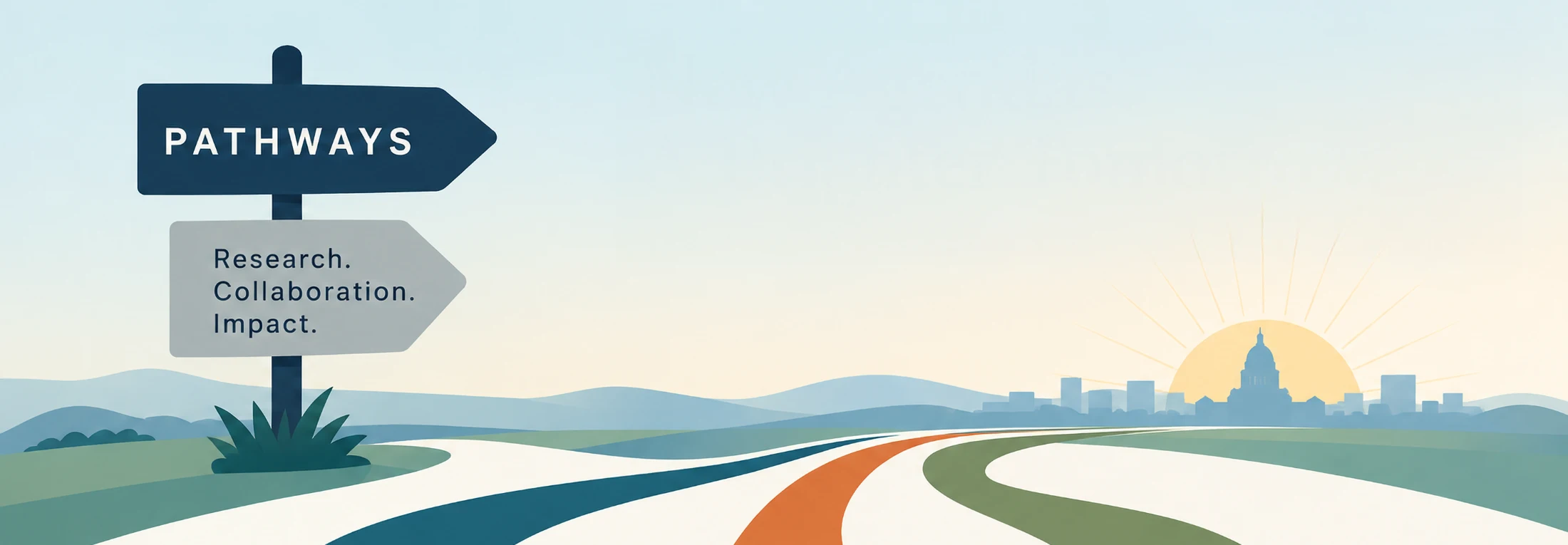
LONESTARP3 first demonstrated our collaborative approach to developing field-relevant research questions through the Pathways agenda, where researchers, practitioners, intermediary organizations, and policymakers worked together to identify shared questions affecting postsecondary opportunity and workforce readiness. Building on the success of the Pathways work, we are applying our research-to-action model to three new topic areas: Public Education Finance, Teacher Workforce, and Early Childhood Education.
Instead of starting with predetermined research questions, we began by getting a fuller picture of these topics by developing landscape analyses that synthesized current research, documented relevant policy developments, and identified research gaps and emerging challenges. With the landscape analyses as a foundation, LONESTARP3 convened a strategy team in the spring of 2026, bringing together voices from research, policy, and practice to collectively shape three research frameworks. Using a generate-categorize-refine model, participants independently generated ideas and then worked together to identify patterns, points of convergence, and areas of productive tension, drawing on the landscape analyses for context. The three resulting research frameworks reflected initial lists of priority questions within each topic area.
The last step was getting the input of the full LONESTARP3 member network. Each member organization completed a survey to select the themes and questions in each new area that most closely represent their institutional priorities for future action-oriented research. This input was key to narrowing three big topics into concrete agendas for new LONESTARP3 research collaboratives to tackle. The three new LONESTARP3 research agendas, reflecting the strands of inquiry and research questions that matter most to our members, are presented below.
Public Education Finance

Strand 1: Return on Strategic State Investments
How do we know if recent strategic state investments in college and career readiness are achieving their intended impact?
Supporting Research Questions:
- What student- and organizational-level outcomes are associated with targeted investments in Career and Technical Education (CTE) and College, Career, and Military Readiness (CCMR) bonus funding?
- What are the conditions that influence whether these investments translate into meaningful outcomes across student populations?
- How do outcomes from these investments vary across demographic, geographic, economic, and institutional contexts?
- What are the conditions that maximize the return on these investments and their associated outcomes?
- How are funds from state investments combined with other resources and what does that reveal about the full set of inputs needed?
- How do state investments, local funds, and institutional capacity interact to influence the return on investment?
- What institutional capacity is required for effective implementation of these investments, and how does implementation vary across institutions?
- How do staffing models, role specialization, and intermediary support improve access to, and management of, complex funding models?
- How does implementation of these complex funding models vary across geographic, economic, and institutional contexts?

Strand 2: Adaptation in Changing Fiscal Conditions
How are schools and colleges sustaining core programs and educational opportunity as enrollment patterns and funding models change?
Supporting Research Questions:
- How have enrollment patterns in both K-12 and community colleges shifted across regions and sectors over time?
- How do enrollment changes interact with funding formulas to shape revenue stability and predictability for sustaining K12 and postsecondary pathways?
- How are institutions making changes to instructional offerings, staffing, and student services in response to enrollment and funding conditions?
- How are institutions adapting to changing enrollment and funding conditions?
- How are institutions forecasting, planning and managing uncertainty as enrollment patterns and funding models continue to change?
- What strategies appear most effective for sustaining educational opportunities in the face of fiscal uncertainty?
Teacher Workforce
Strand 1: Building the Teacher Workforce
What makes different pathways into teaching successful for aspiring teachers and Texas schools?
Supporting Research Questions:
- How do different pathways into teaching prepare aspiring teachers and connect them with the staffing needs of Texas schools?
- How have recent certification policy changes shaped the preparation pathways available to aspiring teachers?
- How do candidate characteristics and program design influence success across different preparation pathways?
- How do preparation pathways available to aspiring early childhood educators differ from those for other teachers, and how do those differences shape outcomes?
- How do different preparation pathways influence classroom practice and student outcomes in early childhood education and across other grade levels?
- Which factors help aspiring teachers enter and complete pathways into teaching, and which act as barriers?
- How do these supports and barriers differ in hard-to-staff contexts, such as rural areas or high-need subjects?
- How do districts anticipate their staffing needs and use strategic staffing approaches to build a sustainable teacher workforce?
- How do connections between districts and preparation pathways help address current and future staffing needs?
- What strategies and supports are most helpful for districts with limited capacity or resources?
Strand 2: Sustaining a Strong Teacher Workforce
What do high-quality teachers need to stay and thrive in the profession?
Supporting Research Questions:
- What do high-quality teachers need to stay and thrive in the profession?
- What strategies help retain teachers and how do they vary across geography, institutional contexts, and teacher characteristics?
Early Childhood Education
Strand 1: Access and Enrollment
What influences families’ ability to access and enroll their children in public pre-K?
Supporting Research Questions:
- How do pre-K eligibility and enrollment patterns compare across regions, communities, and populations?
- Why do some eligible families enroll their children in pre-K while others do not?
- Which outreach and engagement strategies help connect eligible families to available pre-K programs?
Strand 2: Quality and Outcomes
What makes pre-K effective for children and what benefits extend over time?
Supporting Research Questions:
- What developmental and educational outcomes are associated with participation in pre-K programs?
- What factors help sustain positive outcomes through later grades?
- What characteristics of pre-K programs contribute to positive experiences and lasting outcomes for children?
- How do these characteristics vary across geographic areas, program settings, and student populations?

Strand 3: Data and Measurement
Do we have the right information and the right tools to know how early childhood education systems are working?
Supporting Research Questions:
- What early childhood data are available in Texas, and how are they being used to inform decisions and improve programs?
- What limits the use of data across early childhood settings and agencies?
- What additional data or connections across data systems would strengthen understanding of access, quality, and outcomes?
- How well do existing measures of early childhood education quality capture the program elements that matter most for children?
- How well do current screening and assessment tools capture differences in children’s development, skills, and needs?